


The History and Evolution of Lucknow’s Wholesale Lehenga Trade

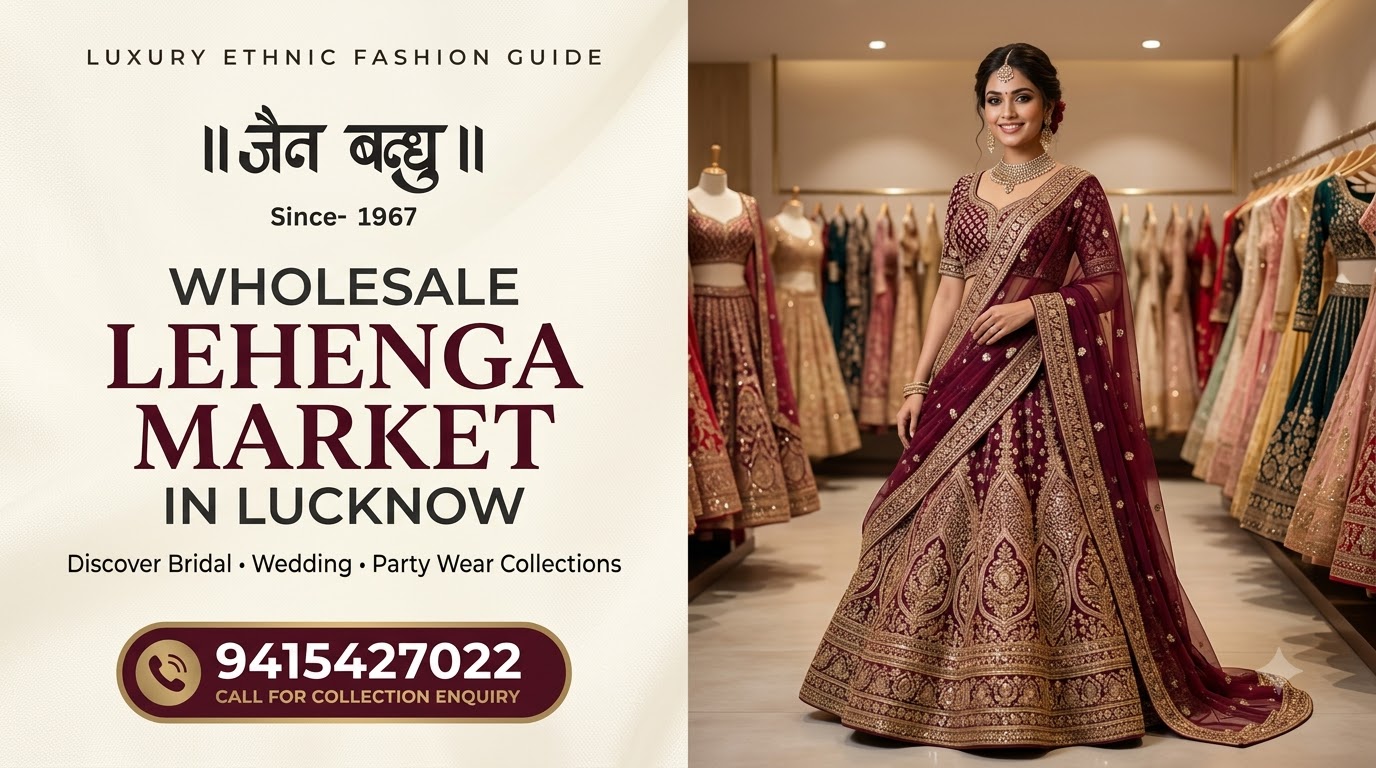
Long before bridal lehengas became a dedicated retail category, Lucknow’s textile trade was already built around wholesale exchange — fabric merchants, embroidery workshops, and tailors operating in close proximity, feeding into what eventually became one of North India’s more established bridal wear hubs. Understanding this history offers useful context for anyone researching the wholesale lehenga market in Lucknow today, since the trade’s roots explain a lot about how it still functions.
From Chikankari Trade to Bridal Wear Hub
Lucknow’s textile reputation was originally built on Chikankari embroidery, a craft that dates back generations and historically centered on lighter daily wear and formal suits. Over the past few decades, as bridal fashion across North India shifted toward richer, more elaborate silhouettes, many of the same embroidery workshops that specialized in Chikankari expanded into heavier bridal work — zardozi, dabka, and gota-patti — feeding directly into what is now recognized as a best lehenga shop in Lucknow ecosystem spanning both wholesale and retail formats.
This organic evolution is part of why Lucknow’s wholesale trade carries a distinct regional character, rather than simply replicating bridal wear trends from other cities.
How the Wholesale Trade Structure Developed
Traditionally, Lucknow’s wholesale trade clustered around specific localities — Chowk, Aminabad, and parts of Daliganj — where merchants, embroidery units, and tailors could work in close coordination. This proximity-based model made it easier for traders to manage quality control and turnaround time, since raw fabric, embroidery, and finishing could all happen within a short distance rather than across a fragmented supply chain.
Over time, as demand grew, this structure supported both bulk trade to smaller retailers across North India and direct sales to individual bridal customers, a dual function that still defines the wholesale lehenga market in Lucknow with price flexibility buyers encounter today.
Retail Showrooms Emerging Alongside Wholesale Trade
As bridal wear demand increased, dedicated retail showrooms began emerging alongside the wholesale trade, offering a more curated, finished shopping experience. Jain Bandhu Saree Showroom in Lucknow, located at Daliganj Bazar, reflects this broader pattern — a retail business that developed within a locality historically connected to wholesale trade, offering finished bridal and ethnic wear while remaining close to the sourcing networks that originally built the area’s textile reputation.
This layered development — wholesale trade first, retail formalization following — is common across many of Lucknow’s established bridal wear localities.
The Entry of National Chains
More recently, national and regional retail chains have entered this space. Brands like Taneira, backed by the Tata Group, and regional retailers such as Rama represent a newer retail layer built on standardized supply chains rather than the localized, workshop-based model that shaped Lucknow’s original wholesale trade. Their presence has introduced more price transparency and predictability to the broader market, even as the traditional wholesale segment continues operating alongside them.
Market Growth and Industry Trends
India’s bridal and occasion-wear segment has seen steady growth over the past several years, with industry estimates suggesting annual growth in the range of 10-15% across tier-2 cities, driven by rising wedding budgets and growing preference for regional handwork over mass-produced designs. Lucknow, given its established embroidery traditions, has benefited from this broader trend, with both wholesale traders and retail showrooms reporting increased footfall during peak wedding months.
How the Wholesale Trade Still Shapes Pricing Today
Because much of Lucknow’s wholesale trade retains close ties to embroidery workshops, pricing within this segment often reflects fewer layers of retail markup compared to more centralized retail models. This is part of why buyers researching a Lucknow lehenga shop with price range often find the wholesale segment, concentrated around Chowk and Aminabad, offers meaningfully different value compared to a fully finished retail piece, even when the underlying craftsmanship is comparable.
What Buyers Can Learn From This History
Understanding this background helps explain why Lucknow’s wholesale lehenga market isn’t simply a budget alternative to retail shopping — it’s the historical foundation on which much of the city’s bridal wear reputation was built. Buyers researching a best bridal lehenga shop in Lucknow with price commitment, or comparing several best lehenga shops in Lucknow, benefit from recognizing this connection, since it often explains why certain shops, wholesale or retail, carry stronger regional craftsmanship than others.
Comparing Old and New Retail Formats
Format | Origin | Pricing Approach | Customization |
|---|---|---|---|
Wholesale Trade | Decades-old, workshop-based | Negotiable, trade rates | High, via tailoring |
Local Retail Showroom | Emerged alongside wholesale trade | Fixed, moderate | Moderate to high |
National Chain | Recent entrant | Fixed, standardized | Limited |
Why This History Matters for Today’s Shoppers
For a bride specifically searching for a best bridal lehenga shop in Lucknow for wedding day wear, this layered history means the city offers genuine choice — from negotiation-friendly wholesale trade to standardized chain retail — each shaped by a different point in the market’s development. Recognizing which format aligns with your priorities, whether that’s craftsmanship authenticity, price flexibility, or predictability, makes for a more informed shopping decision, whether you’re comparing a best lehenga shop in Lucknow with price range or searching specifically for a best bridal lehenga shop in Lucknow near me while already in the Daliganj area.
Searching Locally Today
Buyers searching “lehenga shop near me” in and around Daliganj Bazar are, in a sense, engaging with a locality that has long been part of this broader wholesale-to-retail evolution, offering both direct access to trade-adjacent pricing and finished retail convenience within the same general area.
Frequently Asked Questions
How old is Lucknow’s wholesale lehenga trade?
While exact origins are difficult to pin down precisely, Lucknow’s wholesale textile trade has roots going back several decades, evolving from the city’s older Chikankari and general ethnic wear trade into a dedicated bridal wear segment over the past 20-30 years.
Is the wholesale market still relevant given the rise of retail showrooms and chains?
Yes, the wholesale segment remains highly relevant, particularly for buyers prioritizing price flexibility and access to raw craftsmanship, and it continues to supply many smaller retailers across the region.
How does Jain Bandhu Saree Showroom relate to this broader wholesale history?
As a retail showroom located at Daliganj Bazar, Lucknow, it operates within a locality historically connected to the city’s wholesale textile trade, offering finished bridal and ethnic wear informed by these same regional craftsmanship traditions.