


How to Choose a Bridal Lehenga for Your Wedding Based on Body Shape

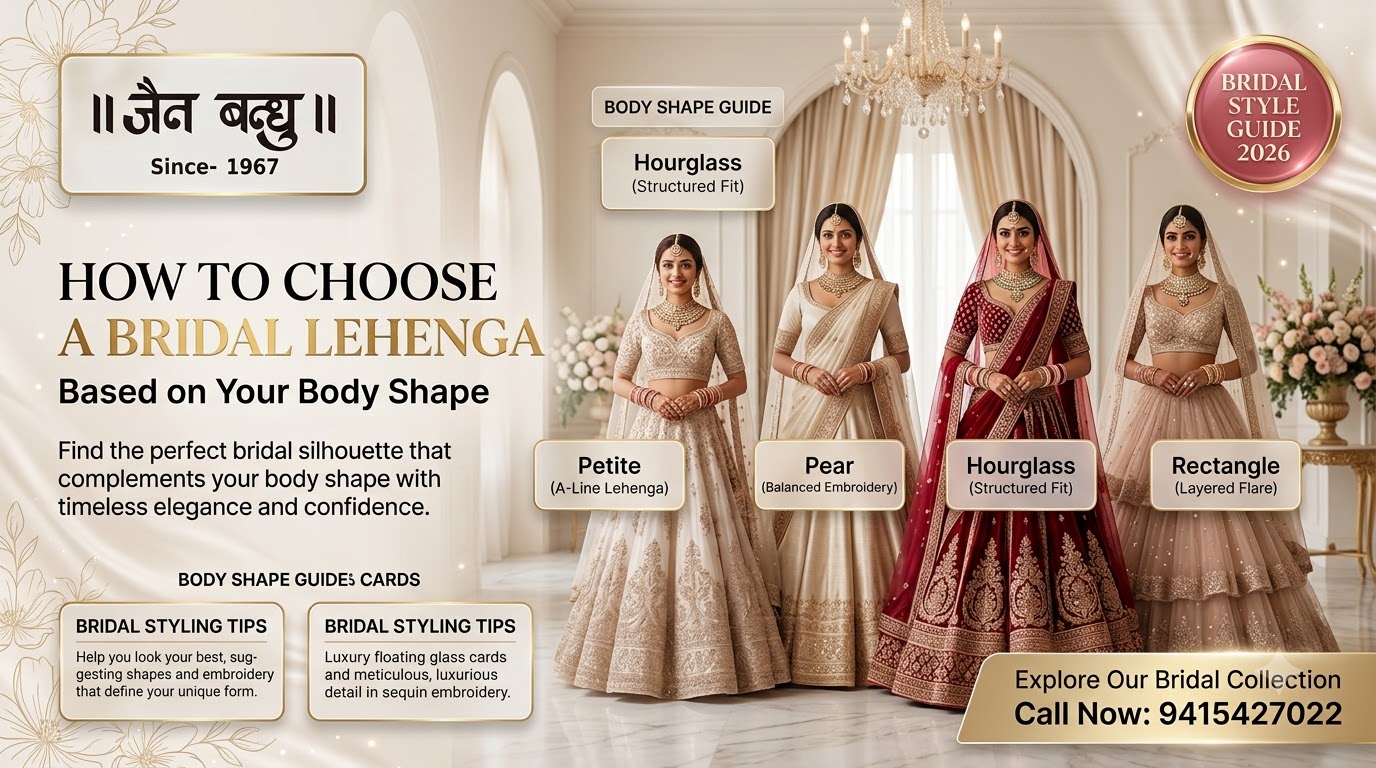
Choosing a bridal lehenga is rarely just about colour or embroidery. The cut that flatters your specific body shape often matters more to how the outfit ultimately looks and feels than the design trend of the season. This is one of the first things an experienced consultant at a Best Lehenga Shop In Lucknow will usually assess before recommending specific silhouettes, and it’s a detail that’s easy to overlook when shopping purely from online catalogues.
Why Body Shape Should Guide Your Lehenga Choice
Every body carries proportion differently, and a lehenga silhouette that looks striking on one bride can look unbalanced on another, regardless of how well it’s constructed. Understanding your own body shape — not as a limitation, but as a starting point — helps narrow down choices faster and reduces the trial-and-error that often makes bridal shopping exhausting. A knowledgeable Lehenga Shop In Lucknow typically begins a fitting consultation by observing proportion and shoulder-to-hip ratio before suggesting cuts, rather than pushing whatever design is currently popular.
Pear-Shaped Body: Balancing Wider Hips
Pear-shaped figures, with hips noticeably wider than the shoulders, generally look best in A-line or flared lehenga skirts that skim over the hip area rather than clinging to it. Detailed, structured blouses with embellishment around the shoulders or a boat neckline help draw visual attention upward, creating better balance across the frame. Heavily embroidered borders at the hem also help, since they widen the visual base of the outfit evenly rather than emphasising the hip area specifically.
Apple-Shaped Body: Defining the Waist
For apple-shaped figures, where weight is carried more centrally around the midsection, an empire waistline — sitting just below the bust rather than at the natural waist — tends to be more flattering. Flowing skirts in georgette or organza, paired with a well-structured blouse that doesn’t cling too tightly at the stomach, create a smoother silhouette. A Best Lehenga Showroom In Lucknow with an experienced tailoring team can often adjust an off-the-rack lehenga’s waistline placement to suit this shape without needing a fully custom design.
H3: Hourglass Body: Working With Natural Proportion
Brides with an hourglass shape — where shoulders and hips are roughly balanced and the waist is more defined — generally have the most flexibility in silhouette choice. Fitted blouses paired with flared or mermaid-style skirts tend to highlight this natural proportion well. The key here is avoiding overly loose or shapeless cuts that hide the waist definition rather than working with it.
H3: Rectangle Body: Creating the Illusion of Curves
Rectangle-shaped figures, with shoulders, waist, and hips roughly aligned, often benefit from designs that introduce visual curves. Peplum-style blouses, layered skirts, or a cinched belt at the waist can create dimension that a straight silhouette might otherwise lack. Embroidery placed strategically at the waist and hip line also helps establish a more defined shape.
Inverted Triangle Body: Softening Broader Shoulders
For brides with shoulders broader than their hips, the goal is typically to soften the shoulder line while adding volume below. V-necklines or scoop necks reduce visual width at the shoulder, while a fuller, more voluminous skirt balances the frame. Heavy embellishment concentrated at the shoulder is usually best avoided for this body type.
Practical Advice Beyond Body Shape Alone
Body shape guidelines are a useful starting point, but they aren’t absolute rules. Personal comfort, the fabric’s natural drape, and how a design photographs under different lighting all play a role too. Many shoppers visiting a Lehenga Shop Near Me find that trying on two or three different silhouettes side by side, rather than committing to a single “recommended” cut based on shape alone, gives a clearer sense of what actually feels and looks right.
Why an In-Person Fitting Makes a Real Difference
Photographs and size charts can only tell you so much. A silhouette that looks appealing on a model may sit quite differently depending on individual proportion, torso length, or posture. This is why an in-person trial remains one of the more reliable ways to judge fit, particularly for something as significant as bridal wear. At Jain Bandhu Saree Showroom, located at Daliganj Bazar, Lucknow, fitting sessions typically involve trying multiple cuts across different fabric weights, which makes it easier to see how a specific shape actually translates to your body rather than relying on general guidelines alone.
A Balanced, Informed Approach
Choosing a lehenga based on body shape isn’t about hiding your figure — it’s about understanding how different cuts interact with your natural proportions so the outfit works with you rather than against you. Combined with good tailoring and an honest in-person fitting, this approach tends to result in an outfit that feels both comfortable and genuinely flattering through a long wedding day.
H3: Combination Body Shapes
Very few people fit neatly into a single textbook category. Many brides carry characteristics of two shapes at once — perhaps a defined waist alongside broader shoulders, or hip width that sits somewhere between pear and hourglass proportions. In these cases, it helps to identify which single feature you’d most like to balance or highlight, and choose silhouette and embroidery details around that priority rather than trying to satisfy every guideline simultaneously. An experienced consultant at a Best Lehenga Shop In Lucknow will usually help identify this priority during the fitting itself, rather than expecting you to self-diagnose beforehand.
The Role of Undergarments and Shapewear
Bridal shapewear, when used thoughtfully, can support the silhouette a chosen lehenga is designed to create, particularly for structured blouses or fitted mermaid-style skirts. This isn’t about drastically altering your body, but rather ensuring the outfit sits smoothly without visible lines or bunching, especially under fitted georgette or silk blouses. It’s worth discussing this with your tailor during a fitting, since the right undergarment choice can meaningfully affect how polished the finished look appears in photographs.
Considering the Full Day, Not Just the Photograph
A silhouette chosen purely for how it looks in a single posed photograph may not hold up as well across a full day of movement, sitting, and changing light conditions. It’s worth asking how your chosen cut behaves during rituals that involve bending, sitting on the floor, or extended standing, since these are common parts of most wedding ceremonies and affect how practical a silhouette proves to be beyond its initial visual appeal.
Why Revisiting Your Choice Before Finalising Helps
Many brides find it useful to step away after an initial fitting and return for a second visit before finalising their decision. Bridal shopping decisions made under time pressure or in a single visit can sometimes overlook small details that become more obvious with a second look. A Lehenga Shop In Lucknow accustomed to serving brides through a multi-visit process will typically accommodate this without pressure to decide immediately.
Frequently Asked Questions
Can body shape guidelines really make a noticeable difference in how a lehenga looks?
Yes, in most cases. The right silhouette for your body shape can significantly improve overall proportion and balance, even when the embroidery and colour remain the same across different cuts.
What if my body doesn’t fit neatly into one shape category?
Most people are a blend of characteristics rather than a textbook example of one shape. An experienced fitting consultant can help identify which elements matter most for your specific proportions rather than relying strictly on category labels.
Should I choose my lehenga silhouette before or after selecting the embroidery design?
It generally helps to decide on a flattering silhouette first, since embroidery and embellishment can then be adjusted or placed strategically within that chosen cut to enhance it further.