


Why Green Sarees for Sawan Are a Cherished Monsoon Tradition

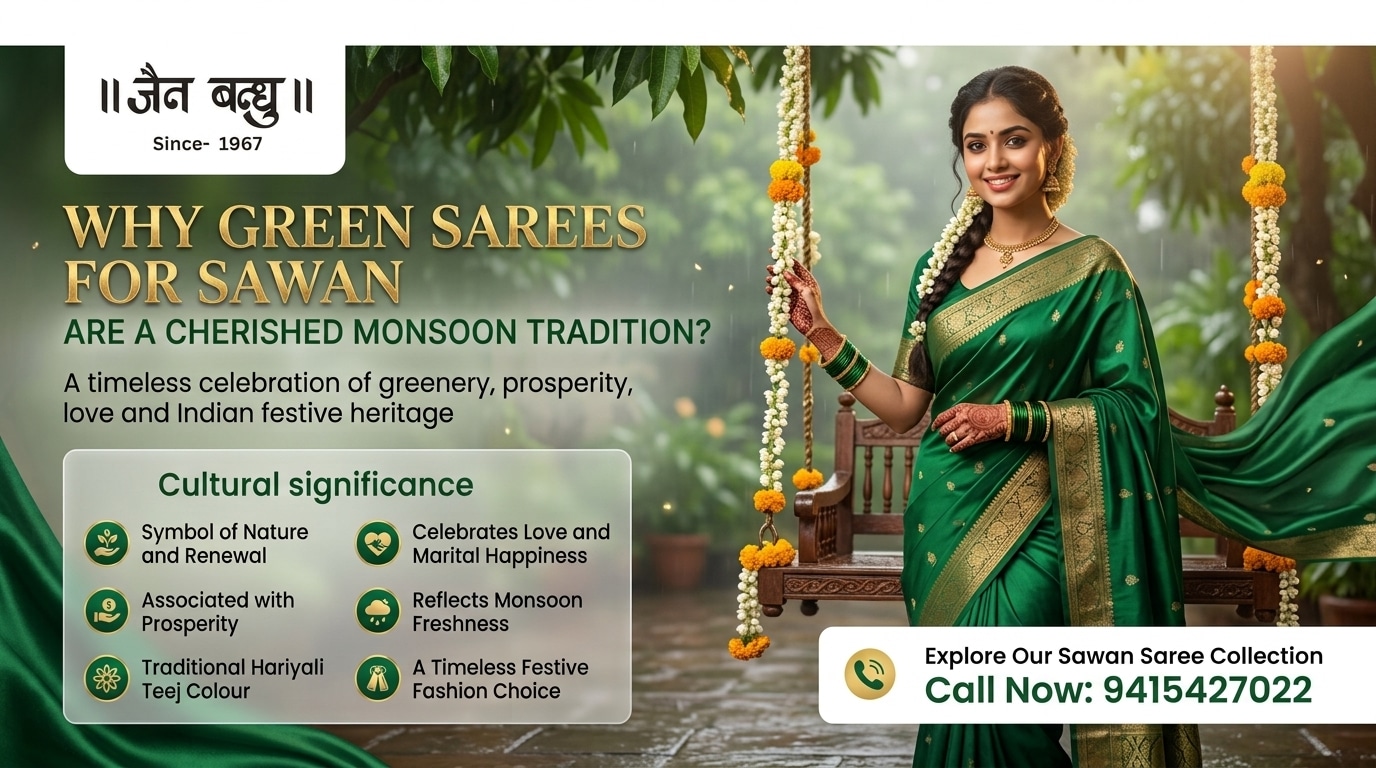
Walk through any Indian market during the month of Sawan and you’ll notice it immediately: green everywhere. Green bangles stacked on wrists, green sarees draped over shoulders, green dupattas catching the monsoon breeze. This isn’t a passing fashion trend. It’s a tradition that reaches back through mythology, nature, and generations of women who have worn this colour with genuine meaning. This piece explores why green sarees remain so central to Sawan, with practical, locally grounded advice for shopping in Lucknow.
The Mythological Roots of Sawan’s Green Tradition
The story most commonly told to explain this tradition centres on Goddess Parvati, who performed years of devoted penance to win Lord Shiva’s heart. According to belief, Parvati wore green during this period of devotion, and since then, women have worn green clothing and bangles during Sawan as a kind of prayer, seeking love, harmony, and wellbeing for their families. In this sense, the colour itself becomes a quiet act of devotion, worn on the body rather than simply spoken.
A Colour Shiva Himself Is Believed to Favour
The connection between green and Sawan runs even deeper through Lord Shiva’s own association with nature. Shiva is closely tied to mountains, forests, and the wilderness, with his abode at Mount Kailash surrounded by greenery. Many devotees believe that wearing green during Sawan pleases Shiva precisely because it mirrors the natural world he is so closely linked to, making the colour choice a genuine gesture of reverence.
Green as a Reflection of the Monsoon Itself
Beyond mythology, there’s a simpler, more visible reason green holds such significance during this month: it’s genuinely everywhere in nature at this time of year. Sawan arrives with the monsoon, and fields, trees, and landscapes turn lush and vivid after the dry heat of summer. Wearing green during this period becomes a way of dressing in harmony with the world around you, echoing the season’s own visible renewal.
The Symbolism Behind the Colour
In broader Hindu tradition, colours are understood to carry particular energy, and green specifically represents nature, growth, healing, and prosperity. There’s also an astrological dimension worth noting: in Vedic belief, green is associated with the planet Mercury, linked to intelligence, clarity, and communication, and wearing it during Sawan is thought to bring calmness and mental steadiness.
Hariyali Teej: Where the Tradition Reaches Its Peak
This connection between green and Sawan reaches its most visible expression during Hariyali Teej, a festival whose very name means “greenery.” Celebrated during the monsoon, Hariyali Teej sees married women praying for their husbands’ long life and wellbeing, while unmarried women pray for a devoted life partner. Women typically begin the day with an early morning bath, dress in green, and apply mehendi, gathering with other women for prayers, songs, and celebration.
Why This Tradition Endures Today
What makes this tradition genuinely remarkable is how it has persisted across generations and continues to feel meaningful rather than obligatory. For many women, choosing a green saree during Sawan isn’t simply about following convention — it’s a conscious link to mothers, grandmothers, and the broader community of women who have worn this colour with the same intention for generations before them.
Why Local Sourcing Genuinely Matters for a Meaningful Purchase
There’s a practical advantage to sourcing a saree meant to carry this kind of cultural and devotional significance through an established local showroom rather than an anonymous online marketplace. A saree shop in Lucknow that sources directly from regional weavers can typically speak with real confidence about a piece’s fabric composition and craftsmanship, details that matter considerably more when the purchase carries genuine cultural weight rather than being purely decorative.
This kind of direct sourcing relationship also tends to mean staff who can speak knowledgeably about the tradition itself, offering guidance that respects the purchase’s full significance rather than treating it as a routine transaction.
Choosing a Green Saree That Honours the Tradition
Given the cultural weight this colour carries, many women take genuine care in selecting their Sawan saree, not just for how it looks, but for how it feels to participate in something with such deep roots. A rich, handwoven fabric with traditional motifs often feels particularly fitting for temple visits and fasting rituals, while lighter, everyday greens work well for the broader month of celebrations beyond the main festival day itself.
Shopping for a Meaningful Green Saree in Lucknow
Lucknow’s own textile heritage, particularly its Chikankari embroidery tradition, gives local showrooms genuine expertise in helping shoppers find a green saree that carries both visual beauty and cultural appropriateness for Sawan’s specific rituals.
This kind of thoughtful, informed guidance is a meaningful reason many shoppers specifically look for the best saree shop in Lucknow when preparing for this particular festive season, rather than choosing a piece without understanding its full significance.
Daliganj Bazar for Sawan Shopping
Daliganj bazar has built a solid local reputation as a dependable destination for festive saree shopping, with a concentration of established showrooms that makes finding the right shade and fabric for Sawan genuinely convenient within a single visit.
Jain Bandhu Saree Showroom is located at Daliganj Bazar, Lucknow, and is known for stocking a genuinely wide range of green sarees suited to Sawan’s traditions, from rich silk pieces appropriate for temple visits to lighter everyday options for the broader festive month. For anyone searching for a saree shop near me while preparing for Hariyali Teej and Sawan, Daliganj bazar offers a convenient, well-established starting point.
What a Good Showroom Should Offer for This Tradition
The best saree showroom in Lucknow for this kind of purchase should understand the cultural significance behind the request, offering guidance suited to specific rituals like Teej puja or temple visits, not just showing customers whatever green happens to be in stock.
A Few Practical Tips
Shop a couple of weeks ahead of Hariyali Teej if possible, since demand for green sarees genuinely intensifies as the festival approaches. If you’re choosing a piece specifically for puja or temple visits, consider a fabric with enough structure to hold its drape through extended rituals, and don’t hesitate to ask showroom staff about the significance behind different shades if you’re new to the tradition.
Frequently Asked Questions
Why do women specifically wear green during Sawan?
The tradition connects to Goddess Parvati, who wore green during her penance to win Lord Shiva’s devotion, as well as Shiva’s own association with nature and the season’s visible connection to monsoon renewal and growth.
What is Hariyali Teej and how does it relate to green sarees?
Hariyali Teej, meaning “greenery,” is a monsoon festival where women wear green while praying for marital happiness and wellbeing, representing the peak expression of Sawan’s broader green tradition.
Where in Lucknow can I find a green saree suited to Sawan traditions?
Daliganj bazar has a cluster of established showrooms, including Jain Bandhu Saree Showroom, located at Daliganj Bazar, Lucknow, offering a genuinely wide range of green sarees appropriate for Sawan’s rituals and celebrations.